Being told you may need foot surgery can leave you with more questions than answers. Many people walk out of that first appointment with a surgery date already set and only a rough idea of what the procedure involves, why it was chosen, or how long recovery will take.
A second opinion means having another foot and ankle specialist look at the same problem before you decide. Often the second visit confirms the original plan. Other times it leads to a different procedure, a different timeline, or a reason to try non-surgical care first. In each case, you make the decision with a better understanding of your own foot.
Start With the Diagnosis
Every surgery recommendation is based on a diagnosis, so that's where a second opinion starts. Foot problems often look alike. Pain at the base of the big toe could come from a bunion, from arthritis in the joint, or from both. Heel pain that won't go away could be plantar fasciitis, a pinched nerve, or a small crack in the bone called a stress fracture. Each of these leads to a different surgery, and some don't need surgery at all.
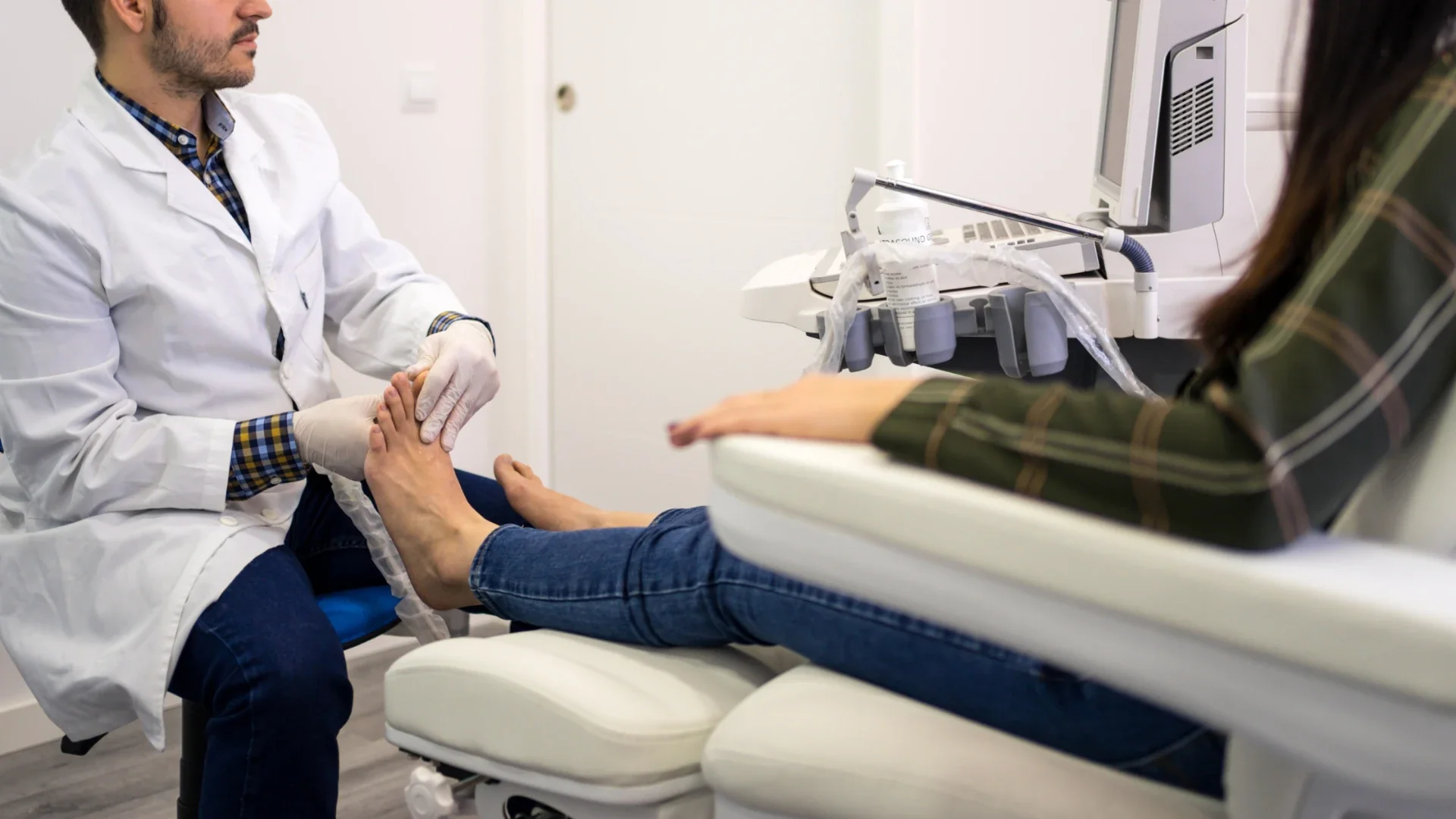
During a second opinion, the podiatrist will usually examine your foot, watch how you stand and walk, and review any X-rays or scans you've already had. New imaging may be ordered if your old images are out of date or were taken while you were sitting or lying down. Standing X-rays are especially useful for bunions, because the bones shift once your weight is on them, and those measurements help decide which type of correction fits your foot.
Has Non-Surgical Care Had a Fair Trial?
Many foot problems that might eventually need surgery can be managed without it for a long time, and some never get to that point. A good second opinion looks closely at what you've already tried, how long you tried it, and whether it was the right fit for your condition.
Non-surgical care can include custom orthotics, better-fitting shoes, a brace or walking boot, physical therapy, or injections. Some podiatrists also offer regenerative treatments like PRP (platelet-rich plasma) or shockwave therapy for certain long-lasting tendon and heel problems. These treatments don't work for everyone, and they can't straighten a toe or correct a severe bone deformity. Still, someone with long-term heel pain who has only tried resting and wearing drugstore insoles may have several options left before surgery makes sense.
It can go the other way, too. If you've worn well-fitted orthotics and done physical therapy for a year and the pain still limits your walking or wakes you up at night, waiting longer may just drag the problem out. A second opinion can help you figure out which of these describes your situation.
Bunion Surgery Second Opinions and the Range of Foot Surgery Options
Bunions are one of the most common reasons people ask for a second opinion, mostly because there are so many ways to fix them. Surgeons have described more than a hundred different bunion procedures. The right one depends on how far the big toe has leaned toward the other toes, how much the bones behind it have spread apart, whether there's arthritis in the joint, and your bone health and activity level.
A few of the broad categories you may hear about:
- Minimally invasive bunion surgery corrects the bone through a few very small cuts in the skin. For the right patient, this can mean less disruption to the surrounding tissue and smaller scars.
- Traditional (open) bunion surgery uses a larger incision to cut and realign the bone. It has been used for decades and works well for many types of bunions.
- Lapidus procedures join two bones together further back in the foot. They're often used for larger bunions or when the bones in that area are loose.
- Big toe joint fusion permanently joins the bones of the big toe joint. It's usually considered when arthritis is severe and straightening the toe alone wouldn't stop the pain.
If you were offered only one procedure, it's reasonable to ask why it was chosen over the others. A surgeon should be able to point to something specific about your foot, such as your X-ray measurements, the health of the joint, or how active you are, that makes that option the best fit.
How Recovery Can Differ From One Surgery to the Next
Recovery is often where expectations and reality don't line up. Two people who both had bunion surgery can have very different experiences. One might be walking in a special post-surgery shoe within a few days. Another, after a fusion, might need to keep all weight off the foot for six weeks or more.
Before agreeing to surgery, you should have a clear picture of the weeks and months afterward. That includes when you'll be able to drive (surgery on the right foot usually means a longer wait), how much time you'll need off work, and when you can get back to exercise. Swelling often lasts several months after foot surgery, which surprises many people who expect to be back in their regular shoes quickly. If the first explanation you got was vague, a second opinion is a good place to get more detail.
When Is a Second Opinion Worth Scheduling?
Not every recommendation needs one. Urgent problems, such as certain fractures or a serious infection, often can't wait for another appointment, and minor office procedures rarely justify the extra visit. A podiatry second opinion tends to be most valuable when:
- surgery came up at the first visit, before conservative care was discussed
- the diagnosis was made without standing X-rays or a thorough exam
- only one procedure was presented, with no explanation of alternatives
- the plan involves a fusion, a reconstruction, or revising a previous surgery
- you have diabetes, circulation problems, or another condition that affects healing
- you still feel unsure about the plan and can't quite say why
Some insurance plans encourage or require a second opinion before elective surgery, so checking your coverage is worthwhile.
What a Second Opinion Looks Like at Put Your Feet First
Bring whatever records you have: imaging discs and radiology reports, notes from your first surgeon, the name of the proposed procedure, and a list of the treatments you've already tried. Dr. Forman will go through those, examine your foot, and talk through what he finds, including where he agrees with the original recommendation and where he sees it differently.
You should leave understanding your diagnosis, the realistic options for your foot, and what each would ask of you during recovery. If surgery is the right choice, you'll go into it knowing why. If there's a reasonable alternative to try first, you'll know what it involves and how long to give it before revisiting the question.
If you've been told you need foot surgery and want an independent review before you commit, call Put Your Feet First in Scottsdale at (480) 423-8400 or email contactus@azfootpain.com to schedule a second opinion with Dr. Forman.